Members of Can band pioneered Krautrock with radical creativity
Table of Contents
- The Origins and Evolution of Can: Pioneers of Krautrock and Avant-Garde Experimentation
- Formation and Early Lineup: The Birth of a Revolutionary Sound
- Key Milestones in Can’s Career: A Timeline of Innovation and Reinvention
- The Cultural and Musical Context of Can’s Era: Krautrock, Avant-Garde, and Psychedelia
- Comparative Analysis: Early vs. Later Albums in Can’s Discography
- Core Members of Can: Roles, Instruments, and Contributions to Avant-Garde Mastery
- Holger Czukay: Architect of Sonic Collage and Tape Manipulation
- Michael Karoli: The Violinist and Guitarist Who Wove Rhythmic Complexity
- Irmin Schmidt: Keyboard Innovator Across Minimalism and Synth Experimentation
- Jaki Liebezeit: The Polyrhythmic Revolutionary Behind Can’s Hypnotic Grooves
- Damo Suzuki: The Hypnotic Voice of Can’s Spiritual Turn
- Collaborative Dynamics: Czukay and Schmidt’s Electronic Partnership
- Firsthand Account: The Intensity of Recording with Can
- Can’s Musical Innovations and Techniques: Redefining Sound Through Experimental Mastery
- Tape Manipulation: The Birth of Can’s Signature Sound
- Step-by-Step Breakdown: Czukay’s Tape Music Techniques
- Free Improvisation in Can’s Live Performances and Its Studio Influence
- Can’s Rhythmic Innovations: Odd Time Signatures and Syncopation
- Integration of Non-Western Musical Elements
Few bands in music history have reshaped soundscapes as radically as Can, whose late 1960s formation in Germany defied conventions with a fusion of avant-garde experimentation and hypnotic rhythms. Emerging from Cologne’s underground scene, the collective—led by visionaries like Holger Czukay and Irmin Schmidt—crafted an identity that blurred the lines between rock, electronic art, and pure noise, laying the foundation for Krautrock’s most influential chapter. Their debut album, Monster Movie, arrived in 1969 as a sonic manifesto, its dense textures and unconventional structures challenging listeners to abandon expectations of traditional songwriting.
Their evolution from raw improvisation to meticulously layered studio experiments reflected a band unafraid to embrace chaos as a creative tool. Can’s music wasn’t just heard—it was experienced, demanding immersion through disorienting time signatures, tape manipulations, and a refusal to conform to Western musical hierarchies. Tracks like "Halleluwah" and "Spoon" became anthems of a genre that rejected commercial appeal in favor of artistic integrity, while collaborations with producer Conny Plank transformed their studio sessions into laboratories for sonic innovation. Yet beyond the technical mastery, Can’s legacy lies in their fearless exploration of sound as a cinematic, almost spiritual force.

The Origins and Evolution of Can: Pioneers of Krautrock and Avant-Garde Experimentation
Can emerged in 1968 in Munich, Germany, as a radical departure from the conventional rock bands of their time. Founded by Holger Czukay, Michael Karoli, Jaki Liebezeit, and Irmin Schmidt, the group coalesced around a shared fascination with avant-garde jazz, psychedelia, and the boundary-pushing potential of rock music. Their early experiments fused free improvisation, electronic textures, and rhythmic complexity, creating a sound that defied categorization. The band’s formation coincided with Germany’s cultural renaissance, where artists sought to break free from the shadows of Nazism and Cold War constraints, embracing instead a spirit of creative liberation. Can’s music became a sonic manifestation of this era, blending the raw energy of rock with the cerebral ambition of modernist art. The late 1960s and early 1970s were a fertile ground for experimental music, particularly in Germany, where bands like Can, Neu!, and Kraftwerk laid the foundation for what would later be termed Krautrock. This movement rejected the polished production of American rock and pop, instead championing raw, textured soundscapes that prioritized texture, rhythm, and improvisation over melodic hooks. Can’s influence extended beyond Germany, inspiring artists from Brian Eno to David Bowie, who cited their work as a turning point in his own creative evolution. Their music was not just an auditory experience but a philosophical statement, challenging listeners to engage with sound on a visceral and intellectual level.
Formation and Early Lineup: The Birth of a Revolutionary Sound
 Can’s initial lineup was assembled through a confluence of personal and artistic connections. Holger Czukay, a classically trained musician and former member of the experimental group The Can, brought a deep understanding of rhythm and electronics, having studied composition under Karlheinz Stockhausen. Michael Karoli, a violinist with a jazz background, contributed a distinctive, often dissonant approach to melody, while Jaki Liebezeit, a drummer with a penchant for polyrhythms, provided the group’s rhythmic backbone. Irmin Schmidt, a pianist and composer, rounded out the core, adding layers of electronic experimentation and tape manipulation. Their first public performance in 1968 at the Münchner Kammerspiele showcased their ability to blend structured composition with spontaneous improvisation, a hallmark that would define their early work.
The band’s name, Can, was derived from the German slang term for marijuana, reflecting their countercultural roots and the psychedelic influences permeating their sound. Early rehearsals were characterized by a spirit of exploration, with the members drawing inspiration from figures like John Coltrane, Frank Zappa, and Stockhausen. Czukay’s use of tape loops and reversed audio, alongside Liebezeit’s hypnotic drumming patterns, created a dense, immersive texture that set Can apart from their contemporaries. Their debut single, "Motorhead" (1969), captured this experimental ethos, featuring a minimalist yet hypnotic groove that foreshadowed the complexity of their future work.
Can’s initial lineup was assembled through a confluence of personal and artistic connections. Holger Czukay, a classically trained musician and former member of the experimental group The Can, brought a deep understanding of rhythm and electronics, having studied composition under Karlheinz Stockhausen. Michael Karoli, a violinist with a jazz background, contributed a distinctive, often dissonant approach to melody, while Jaki Liebezeit, a drummer with a penchant for polyrhythms, provided the group’s rhythmic backbone. Irmin Schmidt, a pianist and composer, rounded out the core, adding layers of electronic experimentation and tape manipulation. Their first public performance in 1968 at the Münchner Kammerspiele showcased their ability to blend structured composition with spontaneous improvisation, a hallmark that would define their early work.
The band’s name, Can, was derived from the German slang term for marijuana, reflecting their countercultural roots and the psychedelic influences permeating their sound. Early rehearsals were characterized by a spirit of exploration, with the members drawing inspiration from figures like John Coltrane, Frank Zappa, and Stockhausen. Czukay’s use of tape loops and reversed audio, alongside Liebezeit’s hypnotic drumming patterns, created a dense, immersive texture that set Can apart from their contemporaries. Their debut single, "Motorhead" (1969), captured this experimental ethos, featuring a minimalist yet hypnotic groove that foreshadowed the complexity of their future work.
Key Milestones in Can’s Career: A Timeline of Innovation and Reinvention
Can’s discography spans six studio albums, each representing a distinct phase in their artistic evolution. Their debut, Monster Movie (1969), marked their entry into the avant-garde scene, blending psychedelic rock with free jazz and electronic experimentation. The album’s title track and "Father Cannot Yell" exemplified their ability to merge chaotic improvisation with structured composition, creating a sense of controlled chaos. By the time they released Soundtracks (1970), the band had refined their approach, incorporating more pronounced rhythmic layers and tape manipulations that would become their signature. The mid-1970s saw Can at the height of their creative powers, with Tago Mago (1971) and Ege Bamyasi (1972) cementing their legacy as pioneers of Krautrock. Tago Mago, in particular, is regarded as a masterpiece of the genre, featuring sprawling, multi-part suites like "Halleluwah" and "Bring Me Coffee or Them." The album’s production, handled by the legendary Conny Plank, emphasized raw, unpolished textures, with instruments often recorded separately and layered to create a sense of depth and complexity. Ege Bamyasi, recorded in Turkey during a period of personal and artistic reflection, marked a shift toward more introspective themes, with Schmidt’s lyrics exploring existential questions and cultural identity. The latter half of the decade saw Can’s lineup undergo significant changes. Karoli left in 1973, replaced by Rosko Gee, a bassist with a funk-infused approach that introduced a new rhythmic dynamism to the group. Their final two albums, Saw Delight (1976) and Out of Reach (1978), reflected this evolution, incorporating elements of funk, disco, and even progressive rock. Despite these shifts, Can’s core experimental ethos remained intact, as evidenced by tracks like "I Want More" and "Saw Delight," which balanced groove with avant-garde complexity. The band officially disbanded in 1979, though Czukay and Schmidt continued to collaborate under the Can name in various forms until the 1980s.
The Cultural and Musical Context of Can’s Era: Krautrock, Avant-Garde, and Psychedelia
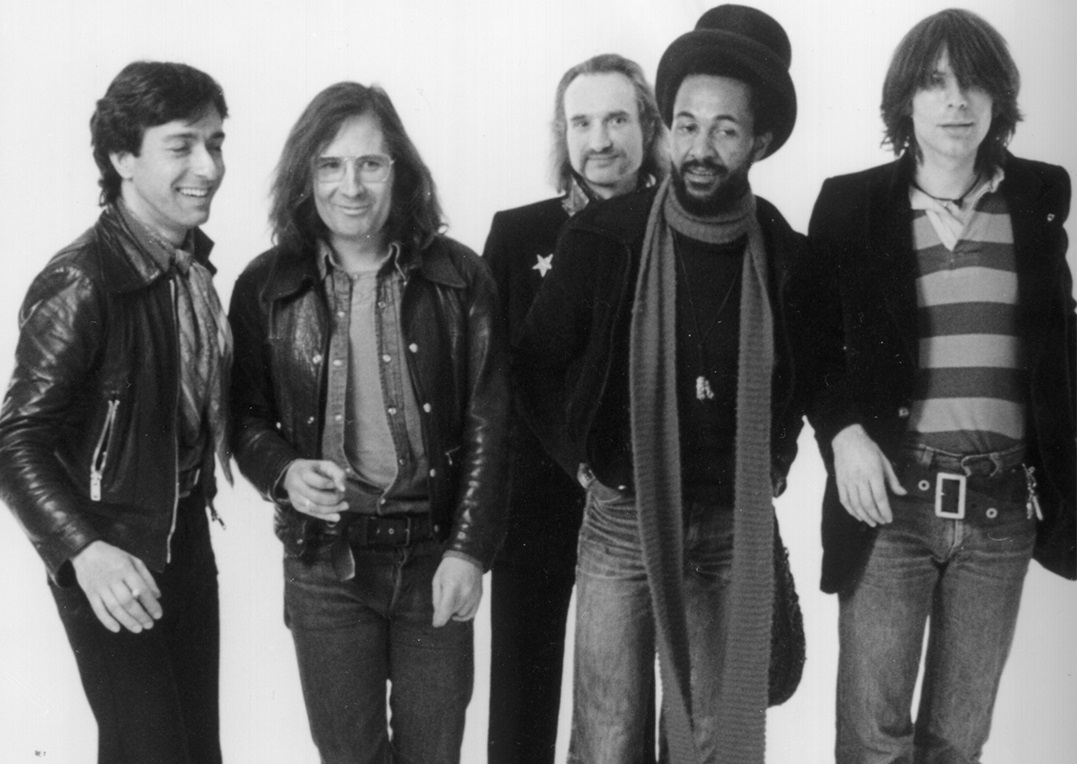 Can’s music emerged from a broader cultural and artistic movement that sought to redefine the boundaries of rock and experimental music. In Germany, the late 1960s and early 1970s were marked by a rejection of traditional musical structures in favor of improvisation, electronic manipulation, and rhythmic experimentation. This movement, later dubbed Krautrock, was influenced by the country’s post-war artistic renaissance, which embraced avant-garde techniques pioneered by composers like Stockhausen and Karlheinz Stockhausen’s electronic music studio at the Westdeutscher Rundfunk (WDR).
The psychedelic revolution of the 1960s also played a crucial role in shaping Can’s sound. Bands like The Beatles and Pink Floyd had demonstrated the potential of rock music to explore non-linear narratives and immersive soundscapes. Can took these ideas further, incorporating elements of free jazz—particularly the work of Ornette Coleman and Cecil Taylor—into their compositions. The result was a music that was as intellectually challenging as it was rhythmically compelling, appealing to listeners who sought an alternative to the mainstream.
Can’s relationship with the broader avant-garde scene was further solidified through their collaborations with other experimental artists. Their association with the Zodiac label and their performances at venues like the Münchner Kammerspiele and Halle 2 in Hamburg placed them at the forefront of Germany’s underground music scene. The band’s music was not merely a product of its time but a catalyst for change, influencing subsequent generations of musicians to embrace experimentation and push the boundaries of their craft.
Can’s music emerged from a broader cultural and artistic movement that sought to redefine the boundaries of rock and experimental music. In Germany, the late 1960s and early 1970s were marked by a rejection of traditional musical structures in favor of improvisation, electronic manipulation, and rhythmic experimentation. This movement, later dubbed Krautrock, was influenced by the country’s post-war artistic renaissance, which embraced avant-garde techniques pioneered by composers like Stockhausen and Karlheinz Stockhausen’s electronic music studio at the Westdeutscher Rundfunk (WDR).
The psychedelic revolution of the 1960s also played a crucial role in shaping Can’s sound. Bands like The Beatles and Pink Floyd had demonstrated the potential of rock music to explore non-linear narratives and immersive soundscapes. Can took these ideas further, incorporating elements of free jazz—particularly the work of Ornette Coleman and Cecil Taylor—into their compositions. The result was a music that was as intellectually challenging as it was rhythmically compelling, appealing to listeners who sought an alternative to the mainstream.
Can’s relationship with the broader avant-garde scene was further solidified through their collaborations with other experimental artists. Their association with the Zodiac label and their performances at venues like the Münchner Kammerspiele and Halle 2 in Hamburg placed them at the forefront of Germany’s underground music scene. The band’s music was not merely a product of its time but a catalyst for change, influencing subsequent generations of musicians to embrace experimentation and push the boundaries of their craft.
Comparative Analysis: Early vs. Later Albums in Can’s Discography
Can’s discography reflects a continuous evolution, with each album offering a distinct sonic and thematic identity. The following table compares their early works with their later output, highlighting shifts in lyrical themes, instrumentation, and production techniques:
| Album | Year | Lyrical Themes | Instrumentation | Production Techniques | Key Tracks |
|---|---|---|---|---|---|
| Monster Movie | 1969 | Psychedelic exploration, existential musings, and surreal narratives | Electric guitars, bass, drums, piano, tape loops, and early electronic effects | Raw, unpolished recordings with minimal overdubs; emphasis on live improvisation | "Motorhead," "Father Cannot Yell" |
| Soundtracks | 1970 | Cinematic storytelling, abstract concepts, and rhythmic experimentation | Expanded use of tape manipulation, synthesizers, and layered percussion | More structured production with deliberate use of echo and reverb | "Father Cannot Yell," "Oh Yeah" |
| Tago Mago | 1971 | Spiritual introspection, cultural critique, and surreal imagery | Dominant use of tape loops, prepared piano, and dissonant violin melodies | Conny Plank’s signature approach: dense layering, minimal editing, and raw dynamics | "Halleluwah," "Bring Me Coffee or Them" |
*Ege B
Core Members of Can: Roles, Instruments, and Contributions to Avant-Garde MasteryCan’s revolutionary sound was forged through the collective genius of its core members, each bringing distinct technical and creative expertise to the band’s experimental framework. While Holger Czukay, Michael Karoli, Irmin Schmidt, and Jaki Liebezeit formed the initial nucleus in the late 1960s, their collaborative chemistry evolved dynamically, absorbing influences from free jazz, electronic music, and Eastern philosophies. Later, Damo Suzuki’s ethereal vocals introduced a spiritual dimension, redefining Can’s sonic and conceptual boundaries. Their individual contributions—whether through tape manipulation, unconventional percussion, or keyboard textures—interwove to create a tapestry of rhythmic complexity, harmonic ambiguity, and hypnotic repetition that became the hallmark of Krautrock.Holger Czukay: Architect of Sonic Collage and Tape ManipulationHolger Czukay’s role in Can transcended that of a bassist; he functioned as the band’s primary sound engineer and sonic architect, pioneering techniques that blurred the lines between music and ambient experimentation. His mastery of tape loops, reverse engineering, and collage-based composition transformed studio recordings into immersive, multi-layered soundscapes. Czukay’s approach was deeply influenced by his studies under Karlheinz Stockhausen and his fascination with musique concrète, a genre that treated recorded sounds as raw material for artistic manipulation. On albums like Ege Bamyasi (1972), Czukay’s tape manipulations became central to the compositional process. Tracks such as "Bring Me Coffee or Tea" feature his signature use of reversed audio, granular synthesis, and looped phrases that create disorienting yet mesmerizing textures. His work on this album also incorporated field recordings—trains, street noises, and found sounds—seamlessly integrated into the music, reinforcing Can’s commitment to breaking down the barriers between studio craft and real-world acoustics. Czukay’s innovations laid the groundwork for later electronic music genres, including ambient and IDM, while his collaborative experiments with Schmidt (discussed later) pushed Can’s sonic palette into uncharted territories.Michael Karoli: The Violinist and Guitarist Who Wove Rhythmic ComplexityMichael Karoli’s dual role as violinist and guitarist was instrumental in shaping Can’s rhythmic and melodic intricacy. His violin playing, rooted in Eastern European folk traditions and free jazz improvisation, introduced a raw, emotive quality to the band’s compositions. Karoli’s guitar work, however, was equally pivotal, often serving as the rhythmic backbone of Can’s music. Unlike conventional rock guitarists, Karoli embraced dissonance, microtonal bending, and percussive strumming patterns that aligned with Liebezeit’s polyrhythms. On Tago Mago (1971), Karoli’s violin solos on tracks like "Halleluhwah" and "Bring Me Coffee or Tea" demonstrate his ability to merge technical precision with expressive chaos. His guitar work on the same album, particularly in "Aumgn" and "Peking O," showcases his knack for creating hypnotic, repetitive grooves that drive the music forward. Karoli’s improvisational style was spontaneous yet structured, often reacting to the live interplay with Liebezeit’s drums and Czukay’s tape loops. This interplay created a sense of organic spontaneity, a hallmark of Can’s live performances, where each show could evolve into a unique sonic experience.Irmin Schmidt: Keyboard Innovator Across Minimalism and Synth ExperimentationIrmin Schmidt’s keyboard contributions to Can evolved dramatically over the band’s career, reflecting shifts in technology and artistic ambition. Initially, Schmidt’s piano work on Monster Movie (1969) was minimalist and atmospheric, providing sparse yet evocative harmonic support. His playing on tracks like "Father Cannot Yell" and "Mushroom" was understated, allowing the band’s collective improvisations to take center stage. This early approach aligned with Can’s desire to strip music down to its essential, rhythmic core, influenced by the band’s exposure to Indian classical music and free jazz. As Can’s sound expanded into electronic experimentation, Schmidt’s keyboard work became increasingly synth-heavy. On Saw Delight (1973), his use of the ARP synthesizer introduced lush, otherworldly textures that complemented Czukay’s tape manipulations. Tracks like "Saw Delight" and "Kaya" feature Schmidt layering synth pads and arpeggios to create immersive soundscapes that oscillate between euphoria and disorientation. His collaboration with Czukay on electronic pieces, such as the untitled instrumental on Ege Bamyasi, showcased their synergy in crafting ambient soundscapes that felt both futuristic and timeless. Schmidt’s adaptability—whether playing piano, organ, or synthesizers—ensured that Can’s sonic palette remained expansive and forward-thinking.Jaki Liebezeit: The Polyrhythmic Revolutionary Behind Can’s Hypnotic GroovesJaki Liebezeit’s drumming was the rhythmic linchpin of Can’s music, a fusion of African polyrhythms, free jazz improvisation, and rock precision. His approach defied conventional notions of drumming, often employing unconventional percussion instruments like the talking drum, shekere, and cowbell alongside traditional kit. Liebezeit’s polyrhythms—particularly his use of 5/4, 7/8, and 11/8 time signatures—created a sense of disorientation that mirrored the band’s avant-garde ethos. On Tago Mago, Liebezeit’s drumming on "Peking O" exemplifies his revolutionary technique. The track’s opening measures feature a hypnotic, interlocking rhythm that seems to shift in real-time, drawing listeners into a trance-like state. His use of brushes and mallets on cymbals and toms added an ethereal quality, while his explosive snare hits punctuated the music with raw energy. Liebezeit’s improvisational skills were equally impressive; he often reacted spontaneously to the band’s collective energy, making each performance a unique experience. His influence extended beyond Can, inspiring generations of drummers in progressive rock, jazz fusion, and electronic music.Damo Suzuki: The Hypnotic Voice of Can’s Spiritual TurnDamo Suzuki joined Can in 1971, bringing with him a vocal style that was as hypnotic as it was enigmatic. A former actor and spiritual seeker, Suzuki’s chant-like delivery introduced a meditative, almost ritualistic quality to Can’s music. His vocals on Ege Bamyasi and Future Days (1973) became a defining feature of the band’s later work, infusing their compositions with a sense of mysticism and transcendence. Suzuki’s contributions to Future Days are particularly notable. On tracks like "Damo Says" and "Bring Me Coffee or Tea," his repetitive, incantatory vocals create a mesmerizing counterpoint to Czukay’s tape loops and Karoli’s violin. His ability to sustain notes with an eerie, almost otherworldly tone added a layer of spiritual depth to Can’s music, aligning with the band’s growing interest in Eastern philosophy and psychedelia. Suzuki’s presence also shifted Can’s dynamic, transforming their studio sessions into communal, almost ceremonial experiences. His influence extended beyond vocals; his presence inspired the band to explore more ambient and meditative compositions, culminating in albums like Inner Space (1972).Collaborative Dynamics: Czukay and Schmidt’s Electronic PartnershipThe partnership between Holger Czukay and Irmin Schmidt was the creative engine behind Can’s most ambitious electronic experiments. Their collaboration transcended traditional composer-performer roles, as both treated the studio as an instrument. Czukay’s tape manipulation techniques and Schmidt’s keyboard innovations merged seamlessly, creating soundscapes that felt both futuristic and organic. Their joint efforts on Ege Bamyasi and Saw Delight produced some of Can’s most innovative tracks. For instance, the untitled instrumental on Ege Bamyasi (often referred to as "The Tape Piece") is a masterclass in electronic collage, featuring Czukay’s reversed audio and Schmidt’s synth layers intertwining in a seamless, immersive soundscape. Similarly, Schmidt’s use of the ARP synthesizer on Saw Delight was often in dialogue with Czukay’s tape loops, creating a sense of harmonic and rhythmic interplay that felt spontaneous yet meticulously crafted. Their collaboration exemplified Can’s philosophy of treating music as a collective, improvisational process rather than a rigidly structured composition.Firsthand Account: The Intensity of Recording with Can"Recording with Can was like stepping into another dimension. The studio wasn’t just a place to lay down tracks—it was a laboratory where sound itself was the experiment. Holger would be in the control room, surrounded by tape machines, splicing loops and reversing phrases until they felt right. Irmin would play the piano or synth with this intense focus, as if he were conducting an invisible |
Leave a Comment
Comments are moderated before appearing. The data you submit is processed according to the Privacy Policy of Leveltagrgdpscc.