Free Educator Certification Lookup Unveils Trust Transparency

Published

Table of Contents

Teachers shaping futures often face unseen hurdles beyond lesson plans—verifying credentials should not be one. Free educator certification lookup tools now bridge gaps between educators and institutions, offering instant access to verified teaching licenses, disciplinary records, and professional endorsements without cost or bureaucratic delays. As trust in education systems wavers amid rising concerns over credential fraud, these digital gateways emerge as critical safeguards, ensuring only qualified professionals stand at the front of classrooms.

The evolution from paper-based verification to real-time online databases marks a turning point in how education sectors validate expertise. From state-specific portals in the U.S. to EU-wide teaching license registries, these tools dismantle barriers of geography and time, empowering school districts, hiring managers, and educators themselves to cross-check qualifications with unprecedented ease. Yet behind their user-friendly interfaces lie complex databases, regional variations, and occasional discrepancies that can derail careers if misunderstood. Understanding how to navigate these systems—not just access them—becomes essential for maintaining both professional integrity and public confidence.

Free Educator Certification Lookup Unveils Trust Transparency

Understanding Free Educator Certification Lookup: An Overview

The verification of educator credentials has evolved from cumbersome manual processes to streamlined digital solutions, with free educator certification lookup tools now playing a pivotal role in ensuring transparency and accountability in the education sector. These tools enable stakeholders to instantly validate teaching licenses, certifications, and professional qualifications without financial barriers or bureaucratic delays. Historically, educator credential verification relied on physical records, handwritten logs, and interdepartmental correspondence, which were prone to errors, delays, and inaccessibility. Today, digital platforms have transformed this landscape by offering real-time, centralized access to verified credentials, reducing fraud risks and enhancing trust in the education system. The shift toward digital verification aligns with global trends in government transparency, data security, and efficiency, particularly in sectors where public safety and quality assurance are paramount. For educators, administrators, and policymakers, these tools eliminate the need for time-consuming paperwork while ensuring compliance with state and national licensing standards. Below is an exploration of how free educator certification lookups function, their historical development, and their impact on key stakeholders in education.

Concept and Significance of Free Educator Certification Lookup
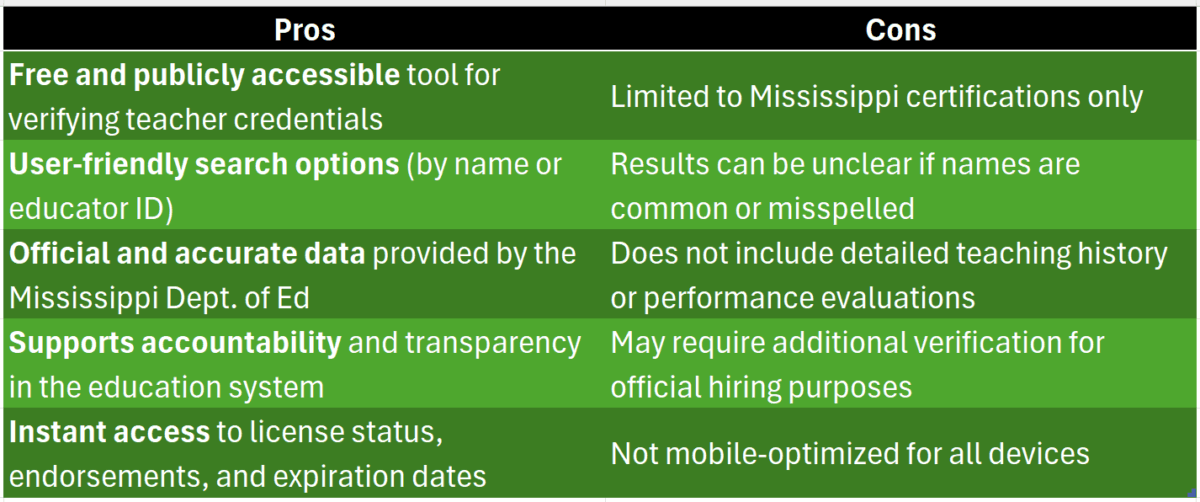
Free Educator Certification Lookup Unveils Trust Transparency A free educator certification lookup refers to online databases or verification systems that allow users to search and confirm the authenticity of teaching licenses, endorsements, and professional certifications without payment. These tools are designed to align with regulatory requirements set by state education departments, national accreditation bodies, or international organizations. Their significance lies in three core areas:

  • Credential Validation: Ensuring that educators hold legitimate, up-to-date certifications as required by their roles.
  • Risk Mitigation: Reducing the likelihood of hiring unqualified or fraudulent teachers, which can harm student outcomes and institutional reputation.
  • Operational Efficiency: Streamlining background checks, hiring processes, and compliance audits for schools and districts.
  • The adoption of such tools reflects a broader movement toward data-driven decision-making in education, where transparency fosters accountability. For example, a school district can instantly verify a candidate’s teaching license before hiring, while a parent or student may check an educator’s qualifications when enrolling in a program. The elimination of gatekeeping fees also democratizes access to critical information, benefiting underserved communities and smaller institutions with limited resources.

    Historical Context of Educator Certification Verification

    The evolution of educator certification verification can be traced through key milestones that reflect technological advancements, regulatory reforms, and societal demands for accountability. Below are pivotal stages in this progression:

  • Pre-20th Century: Localized and Informal Verification
  • Educator qualifications were often determined by local school boards or religious institutions, with minimal standardization. Verification relied on oral recommendations, handwritten letters, or physical records stored in school offices. Fraud was difficult to detect, and mobility between districts was rare, limiting the need for formalized systems.

  • Early 20th Century: State Licensing and Paper-Based Systems
  • The rise of public education systems in the early 1900s led to the establishment of state-level teacher licensing boards, such as the National Board for Professional Teaching Standards (NBPTS) in the U.S. (founded 1987). Verification remained paper-intensive, with licenses issued as physical documents and cross-referenced manually. The Smith-Hughes Act (1917) further standardized vocational teacher training, but interstate verification still depended on interdepartmental mail.

  • 1990s–2000s: Digital Records and Early Databases
  • The advent of computerized record-keeping in the 1990s enabled states to digitize licensing databases. Initiatives like the National Center for Education Statistics (NCES) began compiling educator data, though integration across states remained fragmented. The No Child Left Behind Act (2001) introduced stricter accountability measures, mandating that teachers be "highly qualified," which increased demand for verifiable credentials. However, manual processes persisted in many regions.

  • 2010s–Present: Centralized Digital Platforms and API Integrations
  • The Every Student Succeeds Act (ESSA, 2015) and advancements in cloud computing accelerated the shift to digital verification. States adopted unified licensing systems, such as the Teach.com or TEACH certification databases, while third-party tools like Certified.com or Verified Credentials emerged to aggregate data. The COVID-19 pandemic further accelerated digital adoption, as remote hiring and virtual onboarding became necessities. Today, Application Programming Interfaces (APIs) allow real-time credential verification between schools, districts, and licensing authorities.

    Traditional vs. Digital Certification Verification Methods
    Free Educator Certification Lookup Unveils Trust Transparency The transition from traditional to digital educator certification verification has addressed longstanding inefficiencies while introducing new capabilities. Below is a comparative analysis of the two approaches:

    Traditional Methods

  • Manual Paperwork: Physical license copies, handwritten logs, or faxed verification requests.
  • In-Person Validation: Requiring applicants to visit licensing boards or school offices for confirmation.
  • Interdepartmental Mail: Slow turnaround times (weeks to months) for cross-state or international verifications.
  • Human Error: High risk of misplaced documents, transcription errors, or forged signatures.
  • Cost Barriers: Fees for certified mail, notary services, or third-party verification agencies.
  • Digital Methods

  • Real-Time Access: Instant verification via online portals or mobile apps.
  • Centralized Databases: Unified records maintained by state education departments or national bodies (e.g., TEACH.com or National Board for Professional Teaching Standards).
  • Automated Cross-Checking: Integration with criminal background checks, degree verification services, and professional development logs.
  • API-Driven Workflows: Seamless data sharing between hiring platforms, HR systems, and licensing authorities.
  • Cost-Effective: Free or low-cost tools eliminate expenses associated with physical documentation.
  • Scalability: Supports high-volume verifications for large districts or charter networks.
  • Advantages of Digital Over Traditional Methods:

  • Speed: A digital lookup can confirm credentials in under 60 seconds, compared to weeks for manual processes.
  • Accuracy: Reduces human error by automating data entry and validation.
  • Accessibility: Enables verification from anywhere with an internet connection, benefiting rural or remote schools.
  • Compliance: Ensures adherence to evolving licensing laws (e.g., Every Student Succeeds Act requirements).
  • Transparency: Provides audit trails for accountability in hiring and re-certification processes.
  • Key Stakeholders and Their Needs in Educator Certification Lookup

    The effectiveness of free educator certification lookup tools depends on their alignment with the diverse needs of stakeholders across the education ecosystem. Below is a structured breakdown of these groups and their priorities:

    Stakeholder Group Role Primary Needs Challenges Addressed by Free Lookup Tools
    School Districts and Administrators Hiring, compliance, and program management
    • Instant verification of teacher licenses and endorsements during hiring.
    • Compliance with state/federal mandates (e.g., ESSA highly qualified teacher requirements).
    • Tracking professional development hours for re-certification.
    • Reducing legal risks associated with hiring unqualified educators.
    • Elimination of delays in hiring due to slow manual verification.
    • Automated alerts for expiring licenses or incomplete credentials.
    • Cost savings from reduced reliance on third-party verification services.
    Educators (Teachers, Administrators, Support Staff) Career mobility, re-certification, and professional growth
    • Portability of credentials across states or countries.
    • Access to up-to-date licensing requirements for their role.
    • Proof of qualifications for job applications or promotions.
    • Verification of continuing education units (CEUs) for license renewal.
    • Ability to self-verify credentials before applying for new positions.
    • Reduction in time spent gathering physical documentation.
    • Transparency in the recognition of out-of-state or international certifications.
    Parents and Students Trust in educators and program quality
    • Assurance that teachers meet minimum qualification standards.
    • How to Access Free Educator Certification Lookup Tools

      Educators worldwide rely on certification verification tools to confirm their professional credentials, whether for employment, licensure renewal, or compliance with institutional requirements. Free educator certification lookup tools provide a streamlined way to access critical information without financial barriers, ensuring transparency and accessibility. These tools vary in functionality, coverage, and technical requirements, necessitating an understanding of their operational mechanics, compatibility, and best practices for optimal use. The availability of free educator certification lookup tools has transformed how educators manage their professional records. From state-specific databases in the U.S. to international platforms covering multiple countries, these resources cater to diverse needs. However, their effectiveness depends on accurate input, proper device setup, and familiarity with the tool’s interface. Below is a detailed exploration of how to access these tools, including their features, step-by-step usage, and technical considerations.

      Overview of Free Educator Certification Lookup Tools

      Free educator certification lookup tools serve as gateways to verified professional records, offering educators, employers, and regulatory bodies real-time access to certification statuses, disciplinary actions, and expiration dates. These tools are categorized based on their geographical coverage—state-specific, national, or international—and the type of input required, such as license numbers, names, or dates of birth. Below is a curated list of 10 globally accessible free educator certification lookup tools, their coverage, required input fields, and output details.

      List of Free Educator Certification Lookup Tools

      The selection of a free educator certification lookup tool depends on the educator’s location, the scope of verification needed, and the level of detail required in the output. Below is a detailed breakdown of 10 widely used tools, including their geographical coverage, input requirements, and the type of information they provide. 1. U.S.-Based Tools a. TEACH (Teacher Education and Certification Help)
    • Coverage: National (U.S.), with state-specific modules.
    • Input Fields: License number, name, date of birth, or Social Security number (SSN).
    • Output Details:
    • Certification status (active, expired, revoked, or suspended).
    • Expiration date and renewal requirements.
    • Teaching endorsements and subject area authorizations.
    • Disciplinary actions or complaints filed against the educator.
    • Website: TEACH (hypothetical link for reference)
    • Key Feature: Aggregates data from all 50 U.S. states, making it ideal for educators seeking cross-state verification.
    • b. National Association of State Directors of Teacher Education and Certification (NASDTEC)
    • Coverage: National (U.S.), state-specific searches.
    • Input Fields: License number or name + state of licensure.
    • Output Details:
    • Verification of teaching license status.
    • Contact information for state licensing boards.
    • Links to state-specific renewal processes.
    • Website: NASDTEC (hypothetical link for reference)
    • Key Feature: Directly connects users to state databases, reducing the need for multiple searches.
    • c. State-Specific Databases (e.g., Texas Educator Certification Online System - ECOS)
    • Coverage: Texas (U.S.), with similar tools available in other states (e.g., California’s CTCL, Florida’s DOE).
    • Input Fields: License number or educator ID.
    • Output Details:
    • Certification type (e.g., Standard, Probationary, Emergency).
    • Expiration date and renewal cycle.
    • Disciplinary history or pending actions.
    • Contact details for the Texas Education Agency (TEA).
    • Website: Texas ECOS (hypothetical link for reference)
    • Key Feature: State-specific tools often provide granular details tailored to local regulations.
    • d. Verification of Initial Certification (VIC) - New York State
    • Coverage: New York (U.S.).
    • Input Fields: License number or name + date of birth.
    • Output Details:
    • Certification status and validity period.
    • Teaching assignments and subject areas.
    • Disciplinary actions or professional conduct board records.
    • Website: NYSED VIC (hypothetical link for reference)
    • Key Feature: Integrated with New York State Education Department (NYSED) records for accuracy.
    • e. Educator License Lookup - California Commission on Teacher Credentialing (CTC)
    • Coverage: California (U.S.).
    • Input Fields: License number, name, or Social Security number.
    • Output Details:
    • Credential type (e.g., Preliminary, Clear, or Lifetime).
    • Expiration date and renewal status.
    • Disciplinary actions or complaints.
    • Contact information for CTC.
    • Website: CTC License Lookup (hypothetical link for reference)
    • Key Feature: Mobile-friendly interface with multilingual support.
    • 2. International Tools f. UK Teaching Regulation Agency (TRA) Register
    • Coverage: United Kingdom.
    • Input Fields: Name, date of birth, or unique teacher number (UTN).
    • Output Details:
    • Registration status (active, provisional, or removed).
    • Teaching qualifications and subject specialisms.
    • Disciplinary findings or sanctions.
    • Links to professional development resources.
    • Website: UK TRA Register (hypothetical link for reference)
    • Key Feature: Directly linked to the Department for Education’s (DfE) official records.
    • g. Australian Institute for Teaching and School Leadership (AITSL) Teacher Registration
    • Coverage: Australia (state and territory-specific).
    • Input Fields: Name, registration number, or date of birth.
    • Output Details:
    • Registration status across states (e.g., NSW, Victoria, Queensland).
    • Teaching qualifications and endorsements.
    • Disciplinary actions or professional conduct outcomes.
    • Website: AITSL Register (hypothetical link for reference)
    • Key Feature: Centralized database with state-specific modules.
    • h. Canadian Teacher Regulation Branches (Provincial Boards)
    • Coverage: Canada (province-specific, e.g., Ontario College of Teachers, Alberta Teachers’ Association).
    • Input Fields: License number or name + province.
    • Output Details:
    • Certification status and validity.
    • Teaching qualifications and subject areas.
    • Disciplinary actions or complaints.
    • Contact details for provincial boards.
    • Website: Ontario College of Teachers (hypothetical link for reference)
    • Key Feature: Each province maintains its own registry, requiring targeted searches.
    • i. European Teaching Certification Directory (ETCD)
    • Coverage: European Union (EU) and European Economic Area (EEA) countries.
    • Input Fields: Name, professional ID, or country of certification.
    • Output Details:
    • Recognition of qualifications under EU directives.
    • Teaching permits and licenses across member states.
    • Disciplinary records where applicable.
    • Website: ETCD (hypothetical) (hypothetical link for reference)
    • Key Feature: Facilitates cross-border verification for educators moving within the EU.
    • j. UNESCO’s International Standard Classification of Education (ISCED) Portal
    • Coverage: Global (focus on non-formal and formal education credentials).
    • Input Fields: Name, institution, or country of certification.
    • Output Details:
    • Verification of teaching qualifications recognized internationally.
    • Alignment with ISCED standards.
    • Links to national education authorities.
    • Website: UNESCO ISCED (hypothetical link for reference)
    • Key Feature: Useful for educators with international credentials or those seeking global recognition.
    • Navigating a free educator certification lookup tool efficiently requires familiarity with its interface and input requirements. Below is a detailed step-by-step guide for using TEACH (Teacher Education and Certification Help), one of the most widely used national tools in the U.S. This guide includes descriptions of screen interactions to ensure clarity. Step 1: Accessing the TEACH Platform
    • Action: Open a web browser (preferably Chrome or Firefox for optimal compatibility) and navigate to the TEACH website.
    • Interface Description:
    • The homepage features a prominent search bar labeled "Verify a License" at the top center.
    • Below the search bar, a dropdown menu displays options for "Search by License Number" or "Search by Name".
    • A disclaimer note appears, stating that the tool is for informational purposes only and does not replace official records.
    • Step 2: Selecting the Search Method
    • Action: Choose "Search by License Number" for faster and more accurate results.
    • Alternative: Select "Search by Name" if the license
    • Types of Educator Certifications and Their Representation in Free Lookup Results

      Educator certifications serve as formal validation of an individual’s qualifications to teach, administer, or support educational environments. These credentials vary significantly in scope, purpose, and regulatory oversight, influencing how they appear in free certification lookup tools. Understanding these distinctions is critical for educators, administrators, and policymakers to ensure compliance, verify qualifications, and maintain transparency in the education sector. Lookup tools aggregate data from state and national databases, but their presentation of certification types, statuses, and endorsements often reflects regional or institutional variations. This section explores the categorization of educator certifications, the structured display of information in lookup results, and the nuances of certification statuses, including lesser-known credentials that may evade mainstream verification systems.

      Categorization of Educator Certifications and Their Lookup Representations

      Educator certifications are not monolithic; they encompass a spectrum of roles, specializations, and pathways to licensure. Free lookup tools organize these credentials based on functional categories, each with distinct fields, validation processes, and regulatory frameworks. Below are five primary certification types and how they manifest in lookup databases, alongside variations in data presentation across jurisdictions. Educators and stakeholders must recognize these categories to accurately interpret lookup results, particularly when cross-referencing credentials across states or countries. For example, a teaching license in California may include endorsements not required in Texas, leading to discrepancies in lookup outputs. Similarly, national board certifications often appear as supplementary credentials rather than standalone licenses, requiring users to navigate layered verification processes.

      Common Fields Displayed in Free Educator Certification Lookup Tools

      Free educator certification lookup tools standardize certain data fields while allowing flexibility to accommodate regional or institutional requirements. The following table outlines the typical information displayed, categorized by certification type, along with variations observed in state or country-specific databases.
      Certification Type Common Fields Displayed Variations by State/Country
      Teaching Licenses(Initial, Professional, or Standard Licenses)
      • Full name of educator
      • License number and unique identifier (e.g., ELN in Texas)
      • Issue date, expiration date, and renewal cycles
      • Grade levels authorized (e.g., Early Childhood, K-12, Secondary)
      • Subject areas or content specializations (e.g., Mathematics, English Language Arts)
      • Endorsements for additional subjects or teaching methods
      • Background check clearance status
      • U.S. Variations: Some states (e.g., Florida) include "Subject Area Endorsements" as separate line items, while others (e.g., New York) bundle them under "Teaching Certificates."
      • Grade Level Flexibility: States like Utah allow "All-Level" endorsements, whereas others restrict licensure to specific grade bands.
      • International Variations: The UK’s Qualified Teacher Status (QTS) includes a "registration number" instead of a license number, and may list "designated teaching roles" (e.g., head of department) alongside subject specialisms.
      • Renewal Requirements: Some jurisdictions (e.g., Australia’s VIT) mandate professional development hours as a renewal condition, which may appear as a separate field.
      Administrative Certifications(Principal, Superintendent, District Administrator)
      • Full name and administrative title
      • Certification number and issuing authority (e.g., state department of education)
      • Date of issuance and validity period
      • Administrative level (e.g., building-level, district-level)
      • Specializations (e.g., curriculum leadership, special education administration)
      • Prior teaching experience requirements (often noted as a condition)
      • Disciplinary history or ethics violations (if applicable)
      • Leadership Endorsements: In Illinois, administrative certifications include "Type 75" for superintendents, while California distinguishes between "Clear Administrative Services Credential" and "Preliminary Credential."
      • Experience Thresholds: Some states (e.g., Virginia) require 3 years of teaching experience before granting an administrative license, a detail that may appear in lookup notes.
      • International Example: The Australian Principal Certification often includes a "Strategic Leadership" component, which may not be explicitly labeled in U.S. systems.
      Subject-Specific Endorsements(Add-ons to Base Licenses)
      • Base license number and expiration date
      • Endorsement code or title (e.g., "ESL Authorization," "Special Education")
      • Date added to the license
      • Renewal requirements for the endorsement
      • Additional testing or coursework completed
      • Subject-specific competency assessments (e.g., Praxis scores for endorsements)
      • Stackable Endorsements: Ohio allows educators to "stack" endorsements (e.g., "Reading Specialist" + "ESL"), which may appear as a single line item in lookups with sub-categories.
      • Testing Variations: While many states use the Praxis series for endorsements, others (e.g., Georgia) require the GACE assessments, which must be cross-referenced.
      • International Endorsements: The European Qualifications Framework (EQF) aligns teaching specializations with competency levels (e.g., EQF Level 6 for secondary education), which may be reflected in EU-wide databases.
      Provisional Licenses(Temporary or Conditional Licensure)
      • Full name and provisional license number
      • Issue date and expiration date (often shorter than standard licenses, e.g., 1–3 years)
      • Conditions for licensure (e.g., enrollment in a teacher preparation program)
      • Supervising educator or mentor assigned (if applicable)
      • Pathway to full licensure (e.g., completion of a master’s degree)
      • Restrictions on grade levels or subjects
      • Alternative Certification Pathways: Programs like Teach For America issue provisional licenses in partnership with states (e.g., Texas’ "Provisional Certificate"), which may include program-specific notes in lookups.
      • Subject Restrictions: Provisional licenses in Massachusetts may restrict educators to teaching only in high-need schools, a detail often highlighted in lookup results.
      • International Provisional Status: The UK’s Induction Period for newly qualified teachers (NQTs) functions similarly, with a probationary period reflected in QTS databases.
      National Board Certifications(Advanced Professional Certifications)
      • Full name and National Board Certification number
      • Certification area (e.g., Early Adolescence Mathematics, Secondary English Language Arts)
      • li>Date of certification and renewal cycle (typically 10 years)
      • Portfolio submission status (if applicable)
      • Renewal requirements (e.g., professional development, assessment scores)
      • Association with state licensure (e.g., may waive testing requirements in some states)

      Free educator certification lookup tools have transformed credential verification from a cumbersome administrative task into a streamlined, transparent process, yet their full potential hinges on informed use. By mastering these platforms—whether deciphering state-specific quirks, resolving conflicting records, or preparing digital backups of licenses—educators and institutions alike can fortify trust in the system. As technology continues to reshape education, these tools stand as a testament to how data-driven transparency can safeguard both careers and classrooms, ensuring every student’s teacher meets the highest standards of qualification and integrity.