Education meaning in simple words explained clearly today
Table of Contents
- Core Definition and Basic Explanation of Education
- Simplest Definition of Education in Plain Language
- Comparison Between Formal and Informal Education
- Historical Perspectives on Education in Ancient Civilizations
- Flowchart: The Three-Step Process of Transforming Information into Knowledge
- Purpose of Education: Why Does It Matter?
- Five Primary Purposes of Education Beyond Academic Achievement
- Traditional vs. Modern Goals of Education: A Comparative Analysis
- Step-by-Step Breakdown: How Education Reduces Poverty
- Individual Success vs. Societal Progress: A Comparative Case Study Analysis
- Types of Education: Formal, Informal, and Non-Formal Learning Systems
- Classification of 10 Types of Education Across Three Learning Categories
- Blended Learning Model: Integrating Formal and Informal Education in Modern Settings
- Five Real-Life Scenarios Where Informal Education Outperforms Formal Systems
- Education vs. Training vs. Learning: Key Differences and Practical Applications
- Visual Differentiation: Venn Diagram of Education, Training, and Learning
- Industry Scenarios Prioritizing Training Over Education—and Vice Versa
- Psychological Theories Explaining Learning vs. Education
Education is often seen as the cornerstone of human progress, yet its essence remains misunderstood by many. At its core, education transcends textbooks and classrooms, serving as the invisible thread that weaves knowledge, skills, and values into the fabric of society. From ancient scrolls to digital screens, its purpose has evolved, yet its fundamental role—empowering individuals to think, adapt, and contribute—remains timeless. This exploration breaks down education into its simplest form, revealing how it shapes minds, transforms communities, and redefines futures.
The journey of understanding education begins with dismantling myths and embracing its true nature: a dynamic process that extends far beyond formal institutions. Whether through structured lessons or everyday experiences, education equips individuals to navigate challenges, foster innovation, and bridge gaps between tradition and modernity. By examining its historical roots, modern applications, and often-overlooked benefits, we uncover why education is not just a tool for personal growth but a catalyst for global change. The question then arises: If education is the key, what doors does it unlock—and who holds the keys?
Core Definition and Basic Explanation of Education
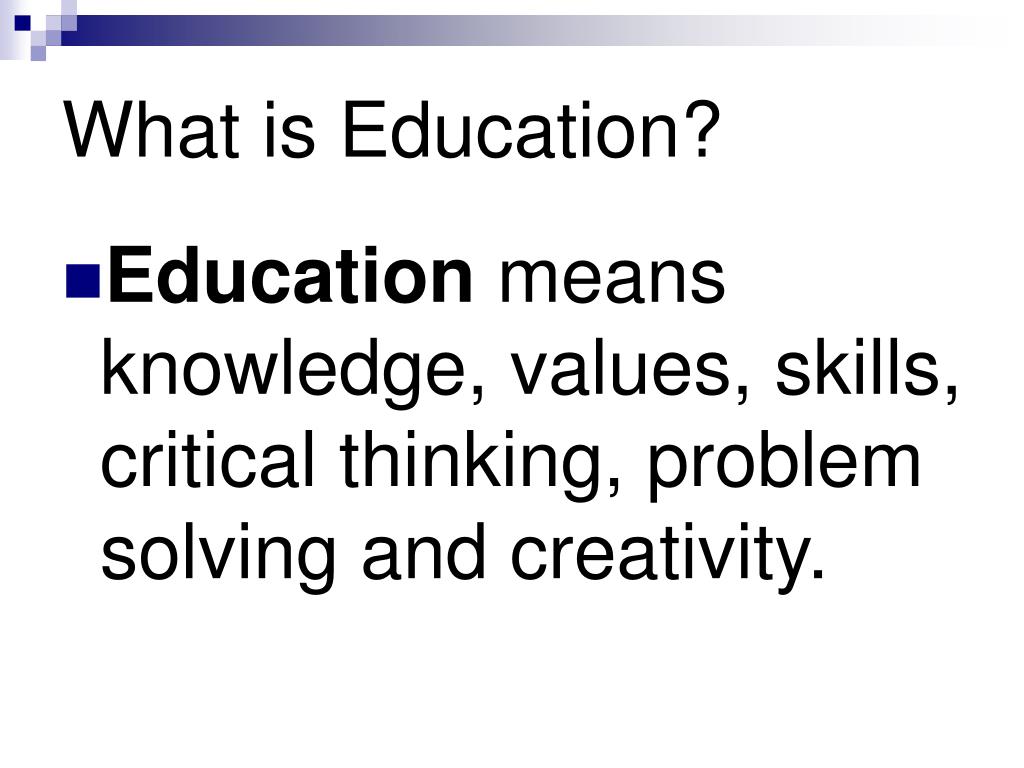
Education is the process of learning and acquiring knowledge, skills, values, and attitudes that help individuals grow and adapt to life. At its simplest, education is like a tool that teaches people how to think, solve problems, and understand the world around them. It can happen in schools, where teachers guide learning, or in everyday life, where experiences shape understanding. The goal is to prepare people to live meaningful lives, contribute to society, and continuously improve themselves. Whether through formal classes or informal experiences, education is the foundation for personal and collective progress. The concept of education is often misunderstood as a rigid or one-size-fits-all experience, but it is dynamic and deeply personal. It evolves with society, technology, and individual needs, making it a vital force in shaping human potential. Below, we explore its fundamental nature—how it is defined, structured, and perceived—while addressing common misconceptions that obscure its true purpose.
Simplest Definition of Education in Plain Language
 Education is the way people learn new things, develop useful skills, and understand how the world works. Imagine a child learning to ride a bicycle: they fall, try again, and eventually succeed. This process—observing, practicing, and improving—is education in action. It is not limited to classrooms; it includes everything from reading a book to watching how parents solve problems at home. The key idea is that education turns confusion into clarity, effort into ability, and curiosity into wisdom. It empowers individuals to make better choices, communicate effectively, and create positive change in their communities.
Comparison Between Formal and Informal Education
Education can be divided into two broad categories: formal and informal. While both serve the purpose of learning, they differ in structure, delivery, and recognition. Below is a comparison highlighting three key differences between the two:
| Aspect | Formal Education | Informal Education |
|---|---|---|
| Structure and Organization | Highly structured with set curricula, schedules, and qualifications (e.g., degrees, diplomas). Institutions like schools and universities provide standardized learning environments. | Unstructured and spontaneous, occurring naturally through daily experiences, conversations, or media. No predefined syllabus or timelines. |
| Recognition and Certification | Recognized through certificates, diplomas, or academic transcripts, which validate skills and knowledge for employment or further studies. | No formal recognition; learning outcomes are self-assessed or validated through real-world application (e.g., mastering a craft through apprenticeship). |
| Delivery Method | Taught by trained educators in dedicated institutions, often with specialized resources like libraries, labs, or digital tools. | Delivered through everyday interactions, such as family discussions, workplace training, travel, or self-study (e.g., online tutorials, documentaries). |
Formal education provides a structured path to acquiring recognized credentials, which are crucial for career advancement in many fields. However, informal education offers flexibility and relevance to real-life situations, allowing individuals to learn at their own pace and from diverse sources. The two often complement each other; for example, a university student might gain technical skills in class (formal) but develop leadership through extracurricular activities (informal).
Historical Perspectives on Education in Ancient Civilizations
 The definition of education has evolved significantly across cultures and eras. Ancient civilizations approached education with unique philosophies that reflected their societal values and priorities. Below are three historical examples that illustrate how education was perceived and structured in early societies:
Education in ancient Greece (around 800 BCE–146 BCE) focused on developing well-rounded individuals through physical, intellectual, and moral training. Philosophers like Plato and Aristotle emphasized paideia, a holistic approach that included music, poetry, athletics, and critical thinking. The goal was to cultivate citizens who could participate effectively in democracy and lead virtuous lives. Unlike modern education, which often prioritizes specialization, Greek education valued a broad understanding of arts, sciences, and ethics.
In ancient China (during the Zhou Dynasty, 1046–256 BCE, and beyond), education was closely tied to Confucianism, which stressed moral integrity, family values, and respect for hierarchy. The imperial examination system, introduced during the Sui Dynasty (581–618 CE), formalized education by requiring candidates to pass rigorous tests on Confucian classics to secure government positions. This system ensured that officials were educated in ethics and governance, but it also limited opportunities to those who could afford private tutoring, creating social disparities.
The ancient Indian subcontinent, particularly during the Vedic period (1500–500 BCE) and the Mauryan Empire (322–185 BCE), viewed education as a means to spiritual and intellectual enlightenment. The gurukul system placed students under the guidance of a teacher (guru) in a residential setting, where they studied scriptures, philosophy, and practical skills like medicine or warfare. Education was not just academic but also included disciplines like yoga and meditation, aiming to harmonize the mind, body, and spirit.
In ancient Egypt (around 3000–30 BCE), education was primarily reserved for the elite, including priests, scribes, and royal families. Children of noble birth learned reading, writing, mathematics, and religious texts in specialized schools attached to temples. The emphasis was on practical skills that supported the administration of the state, such as record-keeping and architecture. Unlike modern systems, Egyptian education lacked mass accessibility, reinforcing social stratification.
These historical approaches reveal that education has always been shaped by cultural, political, and religious priorities. While modern education often emphasizes individual achievement, critical thinking, and global competence, ancient civilizations prioritized moral development, social harmony, and preparation for specific roles in society. The shift reflects broader changes in how societies value knowledge and its application.
The definition of education has evolved significantly across cultures and eras. Ancient civilizations approached education with unique philosophies that reflected their societal values and priorities. Below are three historical examples that illustrate how education was perceived and structured in early societies:
Education in ancient Greece (around 800 BCE–146 BCE) focused on developing well-rounded individuals through physical, intellectual, and moral training. Philosophers like Plato and Aristotle emphasized paideia, a holistic approach that included music, poetry, athletics, and critical thinking. The goal was to cultivate citizens who could participate effectively in democracy and lead virtuous lives. Unlike modern education, which often prioritizes specialization, Greek education valued a broad understanding of arts, sciences, and ethics.
In ancient China (during the Zhou Dynasty, 1046–256 BCE, and beyond), education was closely tied to Confucianism, which stressed moral integrity, family values, and respect for hierarchy. The imperial examination system, introduced during the Sui Dynasty (581–618 CE), formalized education by requiring candidates to pass rigorous tests on Confucian classics to secure government positions. This system ensured that officials were educated in ethics and governance, but it also limited opportunities to those who could afford private tutoring, creating social disparities.
The ancient Indian subcontinent, particularly during the Vedic period (1500–500 BCE) and the Mauryan Empire (322–185 BCE), viewed education as a means to spiritual and intellectual enlightenment. The gurukul system placed students under the guidance of a teacher (guru) in a residential setting, where they studied scriptures, philosophy, and practical skills like medicine or warfare. Education was not just academic but also included disciplines like yoga and meditation, aiming to harmonize the mind, body, and spirit.
In ancient Egypt (around 3000–30 BCE), education was primarily reserved for the elite, including priests, scribes, and royal families. Children of noble birth learned reading, writing, mathematics, and religious texts in specialized schools attached to temples. The emphasis was on practical skills that supported the administration of the state, such as record-keeping and architecture. Unlike modern systems, Egyptian education lacked mass accessibility, reinforcing social stratification.
These historical approaches reveal that education has always been shaped by cultural, political, and religious priorities. While modern education often emphasizes individual achievement, critical thinking, and global competence, ancient civilizations prioritized moral development, social harmony, and preparation for specific roles in society. The shift reflects broader changes in how societies value knowledge and its application.
Flowchart: The Three-Step Process of Transforming Information into Knowledge
Education does not merely involve absorbing information; it transforms raw data into meaningful knowledge through a deliberate process. Below is a structured flowchart describing this three-step journey, which can be implemented using HTML and CSS for visualization: 1. Input (Acquisition of Information)
2. Processing (Understanding and Analysis)
3. Output (Application and Creation of Knowledge)
Implementation Notes for HTML/CSS:
Purpose of Education: Why Does It Matter?
Education transcends the mere acquisition of knowledge—it is the cornerstone of individual transformation and collective advancement. Beyond preparing students for exams or careers, education serves as a catalyst for personal growth, societal stability, and economic prosperity. Its influence extends to shaping cultural identities, reducing poverty, and fostering innovation, making it indispensable in addressing global challenges. Understanding these purposes reveals why education remains a priority in every society, from grassroots communities to global policy agendas.
Five Primary Purposes of Education Beyond Academic Achievement
Education fulfills multifaceted roles that extend far beyond textbooks and classrooms. These purposes address human development, social dynamics, and economic realities, each contributing uniquely to individual and collective well-being. Below are five critical functions of education, illustrated through real-world applications. Education fosters personal development by equipping individuals with self-awareness, resilience, and adaptability. For instance, mindfulness programs in schools, such as those implemented in New Zealand’s "Mindful Schools" initiative, have shown a 30% reduction in student stress levels (Mindful Schools Project, 2021). Similarly, Finland’s holistic education system integrates life skills like critical thinking and emotional regulation, resulting in students who exhibit higher self-esteem and lower dropout rates. Social cohesion is strengthened through education by promoting empathy, cultural understanding, and civic responsibility. The Rwandan post-genocide education reform incorporated trauma-informed teaching and peace education, leading to a 40% decrease in youth involvement in violence (UNICEF, 2019). In South Africa, post-apartheid curricula emphasize reconciliation and inclusivity, fostering unity among diverse ethnic groups. Education drives economic growth by enhancing productivity, innovation, and entrepreneurship. Countries like South Korea and Singapore invest heavily in STEM education, correlating with their global leadership in technology and manufacturing. A World Bank study (2020) found that every additional year of schooling increases a country’s GDP by 9.6% on average, while reducing income inequality. The preservation of cultural heritage occurs through education by transmitting traditions, languages, and historical narratives. In Hawaii, public schools integrate Hawaiian language and indigenous knowledge systems, reversing a decline in native speakers and strengthening cultural identity. Similarly, India’s Sarva Shiksha Abhiyan includes regional languages and folk traditions in curricula, ensuring cultural continuity. Finally, education empowers marginalized groups by breaking cycles of discrimination and exclusion. Malala Yousafzai’s advocacy for girls’ education in Pakistan and Afghanistan highlights how access to schooling dismantles gender barriers. Data from UNESCO (2022) shows that girls with secondary education are 64% less likely to marry as children, and their children are 4 times more likely to survive past age 5.
Traditional vs. Modern Goals of Education: A Comparative Analysis
The objectives of education have evolved alongside societal changes, shifting from rigid, job-oriented models to dynamic, human-centered approaches. Below is a comparative table outlining traditional and modern educational goals, each with a concise explanation.
| Traditional Goals | Modern Goals |
|---|---|
| Job ReadinessPreparing students for manual or clerical roles through vocational training. | Adaptable Skill DevelopmentFostering lifelong learning and agility in response to technological disruptions. |
| Memorization and Rote LearningEmphasizing factual recall as the primary measure of academic success. | Critical Thinking and Problem-SolvingEncouraging analytical skills to tackle complex, real-world challenges. |
| Obedience and DisciplineInstilling conformity to authority figures and institutional norms. | Emotional Intelligence and Social SkillsDeveloping empathy, collaboration, and leadership for personal and professional success. |
| Standardized CurriculaUniform content delivery to ensure consistency across regions. | Personalized and Inclusive LearningTailoring education to diverse needs, including neurodiversity and cultural backgrounds. |
| Elitism and ExclusivityReserving education for privileged classes to maintain social hierarchies. | Equity and AccessibilityEliminating barriers to education for marginalized groups through policy and technology. |
This shift reflects a broader recognition that education must prepare individuals not just for yesterday’s jobs, but for tomorrow’s uncertainties. Modern goals prioritize human agency, ensuring that learners are active participants in their own development rather than passive recipients of information.
Step-by-Step Breakdown: How Education Reduces Poverty
Education is a proven antidote to poverty, disrupting cycles of deprivation through economic mobility and social empowerment. Below is a structured analysis of its mechanisms, supported by empirical data.
"Education is the most powerful weapon which you can use to change the world." — Nelson Mandela
1. Increased Earnings and Employment Opportunities Literacy and higher education directly correlate with higher income levels. UNESCO (2021) reports that individuals with secondary education earn 25% more than those with primary education alone. In Ethiopia, a World Bank study (2018) found that women with secondary education were 20% more likely to secure formal employment, reducing household poverty by 15%. 2. Entrepreneurship and Economic Independence Education equips individuals with financial literacy and business skills, enabling them to create livelihoods. India’s Self-Employed Women’s Association (SEWA) trains rural women in microfinance and vocational skills, lifting over 2 million women out of poverty since 1972 (SEWA Annual Report, 2020). Similarly, microfinance programs in Bangladesh, such as those by Grameen Bank, report that 97% of borrowers are women, many of whom use loans to start small businesses. 3. Health and Productivity Gains Educated individuals make healthier choices, reducing healthcare costs and improving workforce productivity. A Harvard study (2019) found that every additional year of schooling increases life expectancy by 0.4 years due to better health behaviors. In Sub-Saharan Africa, countries with higher female literacy rates, like Rwanda (78% literacy), have lower child mortality rates compared to nations with lower literacy, such as Niger (19% literacy) (UNICEF, 2021). 4. Breaking Intergenerational Poverty Cycles Children of educated parents are less likely to experience poverty, as education fosters better parenting practices and access to resources. The Brookings Institution (2020) notes that children whose mothers complete secondary education are 50% less likely to be malnourished. In Brazil, Bolsa Família, a conditional cash transfer program tied to school attendance, reduced poverty by 28% between 2003 and 2014 (World Bank, 2015). 5. Policy and Social Advocacy Educated populations demand better governance and economic policies, leading to systemic change. The Philippines’ "Education for All" initiative correlated with a 30% reduction in poverty among households where children completed secondary school (Asian Development Bank, 2019). Similarly, South Korea’s education-driven economic policies in the 1960s–80s transformed it from a poor agrarian society to a global tech leader.
Individual Success vs. Societal Progress: A Comparative Case Study Analysis
Education’s impact manifests differently at individual and societal levels, often intertwined yet distinct. Below are three case studies illustrating these dual roles. 1. Bill Gates: Education as a Catalyst for Individual and Global Innovation Gates’ early access to education at Lakeside School, a progressive institution emphasizing computer science, laid the foundation for his entrepreneurial success. His later philanthropic work through the Bill & Melinda Gates Foundation invested $3.5 billion in global education (2010–2020), aiming to improve 100 million lives by 2030. This dual trajectory—personal achievement through education and societal transformation
Types of Education: Formal, Informal, and Non-Formal Learning Systems
Education extends beyond traditional classrooms, adapting to diverse learning needs through structured and unstructured pathways. Formal education follows a rigid curriculum with recognized credentials, while informal and non-formal systems offer flexible, experiential, or community-driven learning. This section explores the classification of education into three primary categories—formal, informal, and non-formal—along with their modern applications, evolving trends, and real-world effectiveness in skill acquisition.
Classification of 10 Types of Education Across Three Learning Categories
The spectrum of education encompasses structured systems (formal), self-directed experiences (informal), and organized yet flexible programs (non-formal). Below is a responsive 3-column table categorizing 10 types of education, each with a brief definition and example. The table is designed for mobile adaptability using CSS media queries, ensuring readability across devices.
| Category | Type of Education | Definition & Example |
|---|---|---|
| Formal Education | ||
| Primary Education |
Structured learning for children aged 5–11, covering foundational literacy, numeracy, and social skills.
Example: Attending a government-run elementary school in India. |
|
| Secondary Education |
Advanced academic or vocational training for adolescents (ages 12–18), often leading to diplomas or certificates.
Example: Enrolling in a high school with a science stream in the U.S. |
|
| Higher Education |
Tertiary-level programs (degrees, PhDs) delivered by universities or colleges, emphasizing specialization.
Example: Pursuing a Bachelor of Engineering at MIT. |
|
| Vocational Training |
Skill-specific programs aligned with industry demands, often combining classroom instruction with apprenticeships.
Example: Completing an electrician apprenticeship in Germany. |
|
| Informal Education | ||
| Family and Community Learning |
Unstructured knowledge transfer through daily interactions, traditions, and cultural practices.
Example: Learning to cook traditional recipes from grandparents. |
|
| Self-Education |
Independent study driven by personal interest, using books, online resources, or experiments.
Example: Teaching oneself coding via freeCodeCamp tutorials. |
|
| Workplace Learning |
On-the-job training or mentorship acquired through professional experiences.
Example: Shadowing a senior designer at a tech startup. |
|
| Non-Formal Education | ||
| Adult Education Programs |
Structured courses for adults, often evening classes or workshops, addressing skill gaps or career shifts.
Example: Enrolling in a night school for GED preparation in the U.S. |
|
| Online Courses (MOOCs) |
Massive Open Online Courses (MOOCs) offering scalable, certificate-based learning on platforms like Coursera or edX.
Example: Completing "Machine Learning" by Andrew Ng on Coursera. |
|
| Community-Based Learning |
Collaborative education initiatives led by local organizations, NGOs, or social enterprises.
Example: Participating in a community garden project to learn sustainable farming. |
CSS Class for Responsiveness: .education-types-table { width: 100%; border-collapse: collapse; } .education-types-table th, .education-types-table td { padding: 12px; text-align: left; border: 1px solid #ddd; } .education-types-table tr:nth-child(even) { background-color: #f2f2f2; } @media (max-width: 600px) { .education-types-table { font-size: 14px; } .category-header { display: none; } }
Blended Learning Model: Integrating Formal and Informal Education in Modern Settings
The blended learning model merges structured formal education with flexible informal or non-formal approaches, creating hybrid systems tailored to modern demands. In workplaces and online courses, this model leverages technology and experiential learning to enhance engagement and outcomes. Below is a diagram description illustrating how the model functions: 1. Formal Education Core (Node A)
2. Informal Learning Integration (Node C)
3. Digital Platforms (Node D)
4. Workplace Application (Node E)
5. Assessment and Adaptation (Node F)
Visual Representation: [Node A: Formal Curriculum] → [Node B: Assessments] ↓ [Node D: Digital Platforms] ↔ [Node C: Informal Learning] ↓ [Node E: Workplace Application] → [Node F: Feedback] → [Node A] Example in Action:
Five Real-Life Scenarios Where Informal Education Outperforms Formal Systems
Informal education excels in contexts requiring adaptability, cultural relevance, or hands-on expertise, where rigid curricula may lag behind real-world needs. Below are five scenarios where self-directed or experiential learning delivers superior results: 1. Culinary Skills
2. Language Acquisition
3. Entrepreneurship
4. Technical Troubleshooting
Education vs. Training vs. Learning: Key Differences and Practical Applications
Understanding the distinctions between education, training, and learning is critical for individuals, educators, and industries aiming to optimize skill development and knowledge acquisition. While these terms are often used interchangeably, they serve distinct purposes—education fosters holistic intellectual growth, training equips individuals with specific, practical skills, and learning is an inherent, self-directed process. This section explores their unique characteristics, overlaps, and real-world applications, supported by psychological theories, industry examples, and technological advancements that are reshaping their boundaries.
Visual Differentiation: Venn Diagram of Education, Training, and Learning
The interplay between education, training, and learning can be visualized through a three-circle Venn diagram, where:
Overlapping Areas:
Unique Aspects:
Industry Scenarios Prioritizing Training Over Education—and Vice Versa
The choice between training and education depends on industry demands, cost efficiency, and career trajectories. Below are five scenarios where one approach is favored over the other, with industry-specific examples. Training Over Education: 1. Healthcare: Emergency Response Drills
2. Manufacturing: Machinery Operation
3. Retail: Customer Service Excellence
4. IT: Cybersecurity Bootcamps
5. Hospitality: Leadership Development Programs
Education Over Training: 1. Academia and Research: Doctoral Programs
2. Law: Juris Doctor (JD) Degrees
3. Engineering: Accredited Degree Programs
4. Medicine: Medical School and Residencies
5. Arts and Humanities: Creative and Ethical Development
Psychological Theories Explaining Learning vs. Education
Three foundational psychological theories illustrate why learning differs from education, emphasizing
Education is far more than memorization or certification; it is the silent architect of resilience, creativity, and collective advancement. From ancient philosophers who debated its purpose to modern policymakers reshaping its delivery, the conversation around education continues to evolve—yet its core mission endures: to illuminate minds and elevate societies. As technology redefines learning landscapes and global challenges demand adaptable solutions, the true meaning of education lies in its ability to empower individuals to question, create, and lead. In a world where knowledge is power, understanding education’s essence is the first step toward harnessing its full potential for a brighter, more inclusive future.
Leave a Comment
Comments are moderated before appearing. The data you submit is processed according to the Privacy Policy of Leveltagrgdpscc.